On set
April 18, 2026 at 07:05 PM
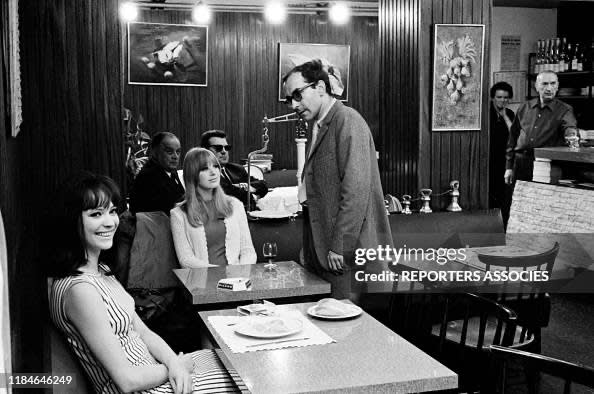
On set
1/2/26
An analysis of Jean-Luc Godard's film Made in U.S.A.
We can trace back to the standardization of films from the earliest development of cinema, the rationalization of form emerging from the mass production of films to assimilate the audience with familiarity. The fact that audiences grew accustomed to this popular form thus generated side effects that Jean-Luc Godard believed to be dangerous, primarily because he believed it deprived them of critical thought, thereby clouding the horrors of modern society and distorting their ability to grasp truth. Here, we must be clear about the integration mentioned because Jean-Luc Godard is combating and expressing many things at once when unfolding his new thought of cinema. According to Jean-Luc Godard, the corruption stems not only from the form of cinema, but also from the ideology, and therefore, these are seen primarily as one. This unification launches his attempt to overcome these errors with the same device of cinema by making his films more difficult and visceral, with the purpose of elevating the audience into an awareness of their own blindness, both political issues, and the seductive effect cinema has. This is the point where Jean-Luc Godard urges cinema to take on a new form. He retreats to an extreme anti-conventional form that includes: fragmented dialogue, contorted narrative, and illogical structure. This is also the point where the general audiences depart because they find him to be too alienating and technical, which depletes their wish to understand the film. It is true that his films can leave the audience disoriented and confused. However, I believe the greater scrutiny and analysis the audience can impose onto the film, the more rewarding his films can actually be. One critique we can immediately raise is whether or not the film form he believed was corrupting the audience is, in fact, as pernicious as he asserts. We can begin by stating that the familiarity that exists with conventional form shouldn’t be recognized as an error when it is able to communicate authentic storytelling that moves the individual into experiencing aesthetic beauty or gaining a greater awareness of the complexity of human nature, which could be a benefit for the audience. In many cases, there have been many great standard films that do address similar current modern issues that Jean-Luc Godard wished to address in his own epoch. Therefore, it is clear this convention does not completely disable critical thinking and individual awareness; however, the criticism that Jean-Luc Godard is raising isn’t form itself being unable to achieve the same means that we are addressing here, but it is the offshoot of conventional cinema that leads to a mode that does in fact invert the qualities of thought and beauty. More specifically, it is the conditioning the audience builds unknowingly; it is the rejection of a secondary form, either being an unconventional form or the content within the form, which attempts to communicate more rigorous formal and perceptual demands than those normalized by dominant cinema, that is obstructed indirectly from the audience's own standard comfort. This habitual preference leads to a blindness of how films subdue the audience, which then permits an imposition of artificial thought, since the habitual state they are in does not require further intellectual labor.